Family business advisory
Ownership vs Management in a Family Business
A founder can say who will own the business in a second. Who will run it takes much longer.
In short: Owning a business and running it are two different jobs. Many founders give their children equal shares and equal say, and call it fairness. But shares can be divided equally and the final say cannot, so decisions stop when two people share command. The fix is to ask the two questions apart, name one leader, and let every owner share fairly in what the business earns.
Two questions that sound like one
Ask a founder who will inherit the business. The answer comes easily. "All my children. Equally."
Now ask the same founder who will run it. Watch the pause.
Many founders look at you as if you asked the same question twice. You did not. You asked two different questions.
The gap between them is quiet, and few people notice it. Yet it has broken more families than any market has.
Owning a business and running it are not the same thing. Ownership is a right. Running is a responsibility.
A right can be shared equally among children. Much of the work can be shared too. But one thing cannot be shared at all.
The final say.
A fair plan that was not fair
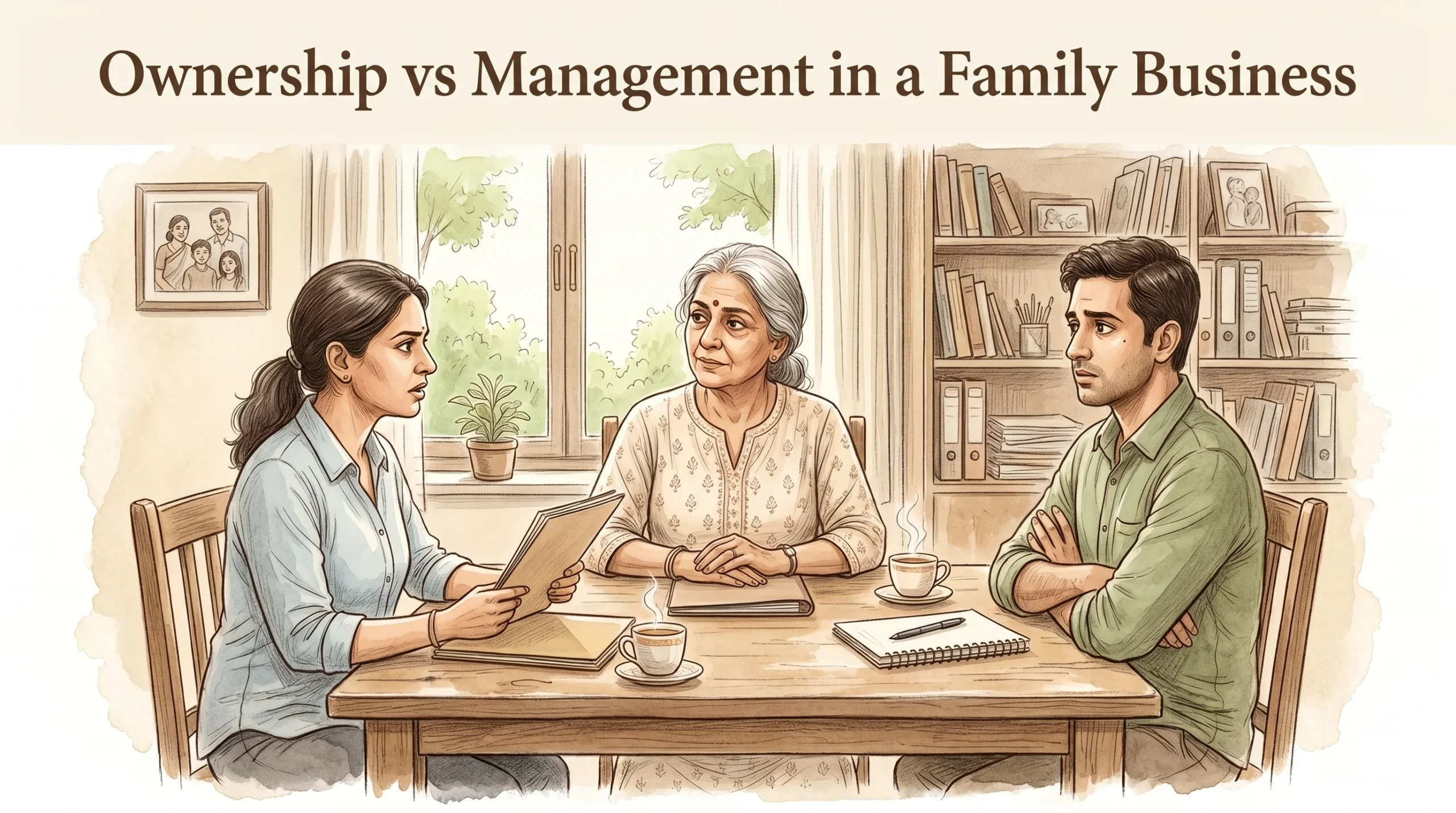
Take a mother who built her company over thirty years. She has two children. She loves them without measure and without difference.
When the time comes, she does what feels fairest. She leaves the business to both.
Equal shares. Equal say. Equal seats at the table.
She believes she is protecting them.
She is setting them against each other.
What the child who runs it carries
Her daughter has given the business fifteen years. She is there before the staff arrive and after they leave. She takes the worry home at night.
Yet every real decision she makes needs approval from her brother. He owns exactly as much as she does. He works somewhere else.
She is a leader on paper. In practice, she is asking for permission.
Slowly, one question grows inside her. Why should someone who does not carry the weight hold half the control?
What the child who owns it feels
Her son is not lazy. He is not greedy. The business is his inheritance too. His mother built it, his name is in it, and his children's future depends on it.
When his sister decides things without him, he does not feel free. He feels erased.
He is not fighting for control. He is fighting to matter.
Miss that, and you will mistake his hurt for greed. And you may lose him for good.
Why the founder cannot choose
Why does the mother not simply say who leads?
Because choosing a leader feels like choosing who she loves more. If she names her daughter, is she telling her son he is worth less? A parent cannot rank her children. Everything in her says no.
So she keeps the two questions together, and she calls that fairness.
But equal ownership and equal authority are not the same gift. She could not bear to rank her children. So she left them to rank each other.
The quiet cost of two captains
Nothing breaks on the first day. The cost arrives slowly.
Decisions slow down. Every important choice needs everyone. In time, it needs a meeting that nobody wants to call.
The one who works grows resentful. She carries the load and cannot act on it.
The one who owns grows suspicious. He sees decisions made without him and wonders what else is decided.
A smaller competitor passes you. Hungry rivals move fast. A business with two captains turns in circles.
The family goes quiet. People who once shared everything stop speaking to each other at weddings.
"You can divide what you own. You cannot have two captains commanding the same ship." Sandeep Amar Guppta
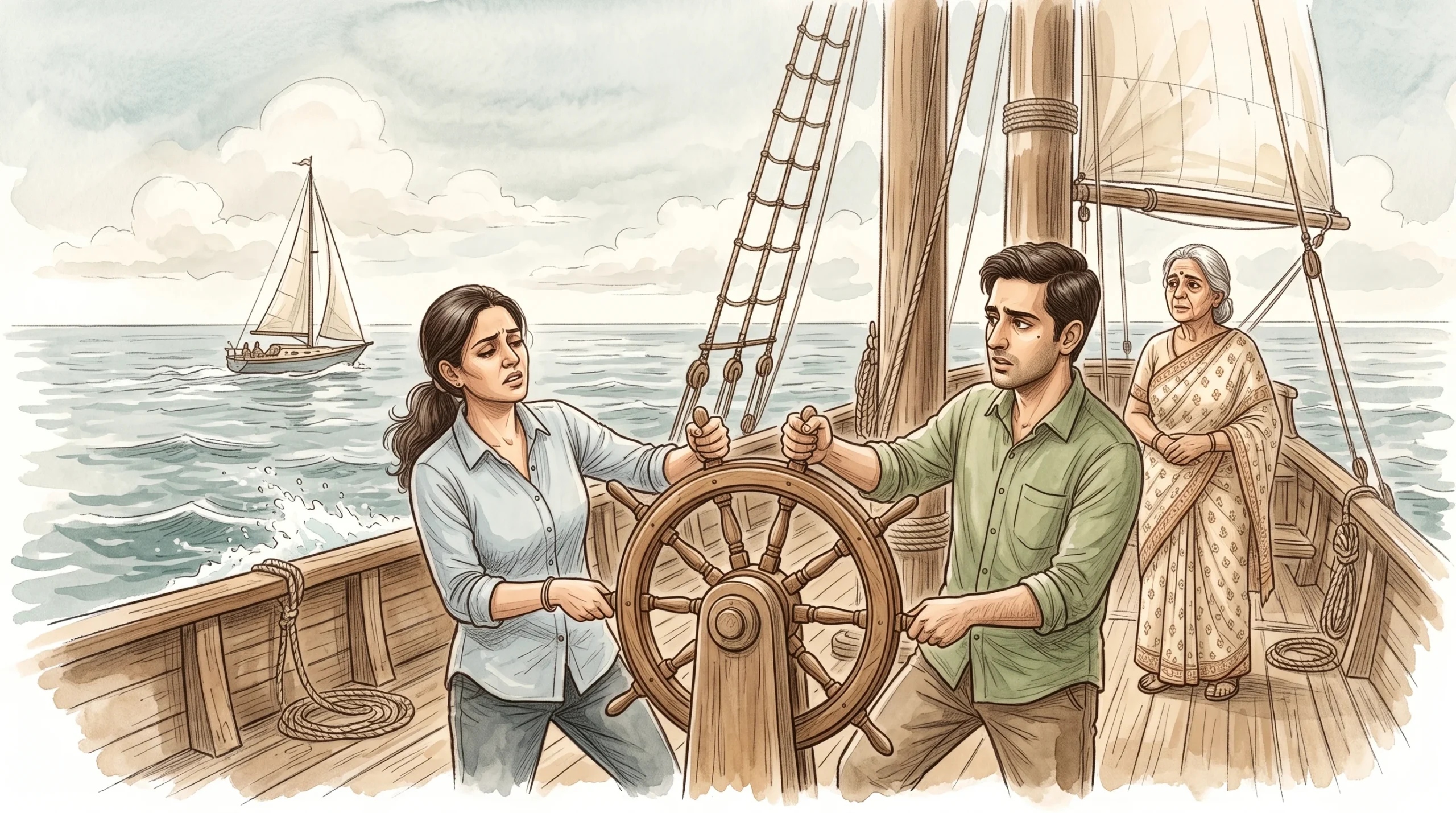
The quiet cost of two captains
Nothing breaks on the first day. The cost arrives slowly.
Decisions slow down. Every important choice needs everyone. In time, it needs a meeting that nobody wants to call.
The one who works grows resentful. She carries the load and cannot act on it.
The one who owns grows suspicious. He sees decisions made without him and wonders what else is decided.
A smaller competitor passes you. Hungry rivals move fast. A business with two captains turns in circles.
The family goes quiet. People who once shared everything stop speaking to each other at weddings.
"You can divide what you own. You cannot have two captains commanding the same ship." Sandeep Amar Guppta
Two families at the same fork
Picture two families who reach the same choice.
The first keeps everyone equal in everything. Equal ownership. Equal say.
The one who works grows bitter. The one who does not work grows doubtful. Decisions stop. In the end, they sell at a loss, split the money and stop speaking.
The second family does something braver. The shares stay equal, and always will. But they name one child to lead. The others agree, out loud and on paper, that the leader runs the business while everyone shares fairly in what it earns.
The leader answers to the owners for results. The owners do not reach for control.
The business grows. And the family stays a family.
Two well known examples
India has a famous case of this idea. The Tata group separated ownership from management. It documented its values and built governance that did not depend on one person's judgment. The business outlasted its founder by design.
Gucci shows the other side. The third generation destroyed a luxury empire. They were not incompetent. They had no shared way to decide when they disagreed.
The difference was not talent. It was whether the family had settled who decides.

How to separate the two questions
There is no perfect formula. But these steps help most families.
1. Ask the two questions apart
Write "Who owns?" and "Who leads?" in two columns. Do not answer them yet. Once they separate, the tension finally has somewhere to go.
2. Choose the leader for the business
Choose for the good of the business. Not for peace at home. And not as a measure of your love.
3. Keep ownership fair
Shares can stay equal. A child can share in the profits without running the company. Every owner should share fairly in what the business earns.
4. Say it out loud and write it down
All the owners agree that one person leads. A spoken promise fades. A written one is easier to keep. A family constitution is a good place to record roles.
5. Make the leader answer to the owners
The leader reports on results, openly and on time. The owners keep their respect and their information. They do not take back control.
A founder might begin like this:
"You will both share in this equally. That will never change. But sharing what we own is not the same as sharing command. One of you will carry it. That does not mean I love one of you more."
The child who runs it might say:
"I will share the work with anyone who truly wants to help. But I cannot lead if every choice needs a vote from someone who is not here. Let me hold the final word, and I will answer to you."
The child who owns it might say:
"I do not want to run it. I want to know it is in good hands, that I am respected as an owner and that I share fairly. Give me that, and I will not reach for control."
When you are ready to plan the handover itself, read Succession in family business: how to hand over control step by step.
Questions to sit with
Answer these alone, and preferably in writing.
- Who has the final say in my business today? Does everyone agree on that?
- Am I choosing a leader for the business, or choosing peace at home?
- Does the child who runs the business need approval from an owner who is not there?
- Have I asked the child who owns but does not lead what they need to feel respected?
- Can I separate my love as a parent from my choice of leader?
The last question is the hardest. It is also the one that explains why the other four have waited so long.
Frequently asked questions
What is the difference between ownership and management in a family business?
Ownership is the right to own shares and share in the profits. Management is the duty to run the business every day and make decisions. One person can do both, but they are separate roles. In a family business, it helps to decide them separately, so that owning does not automatically mean leading.
Can a family business have equal owners and one leader?
Yes. Many families keep shares equal and still name one person to lead. The owners agree, out loud and on paper, that the leader runs the business and answers to them for results. The owners share fairly in what the business earns but do not take over decisions.
Should the best leader also be the biggest owner?
Not always. A child can lead without holding the largest share. Another child can own a share, and share fairly in the profits, without running the company. What matters is that everyone agrees on who leads, and that the owners feel respected and informed.
What happens when two siblings share control equally?
Decisions slow down because every choice needs both. The sibling who works every day may feel stuck. The sibling who does not may feel left out. Over time, this can lead to resentment, suspicion and a business that cannot move as fast as its rivals.
How do you separate ownership from management in a family business?
Start by asking two questions apart: who owns, and who leads. Choose the leader for the good of the business and keep ownership fair. Then agree on it, write it down, and make the leader answer to the owners for results. Many families need a neutral advisor to hold this conversation.
Naming a leader is not ranking your children
Most founders fear that choosing one leader means choosing one child over another.
It does not. Refusing to choose is what ranks them against each other.
If this conversation has waited in your family for years, Sandeep works with business families on exactly these questions. Learn more about his Family Business Succession advisory or bring one question your family has been carrying.
Two captains do not sail twice as fast.
About Sandeep Amar Guppta
“Inheritance Is Not Succession” is the philosophy at the heart of Sandeep Amar Guppta’s work. He challenges how families think about succession, focusing on what is often overlooked: the human dynamics of leadership transitions, the difficult conversations needed to resolve intergenerational conflict, and what it takes to build a lasting legacy.
Drawing on 45 years of experience, Sandeep created The S.H.E. Framework™, integrating the spiritual, human and economic dimensions of leadership and business.
A Fellow Chartered Accountant, he guides clients to explore how money, purpose and human behaviour interact. He helps founders, leaders and organisations, within and beyond family businesses, align purpose, people and performance to remain relevant, productive and profitable.
Work with Sandeep: sandeepamarguppta.com/work-together